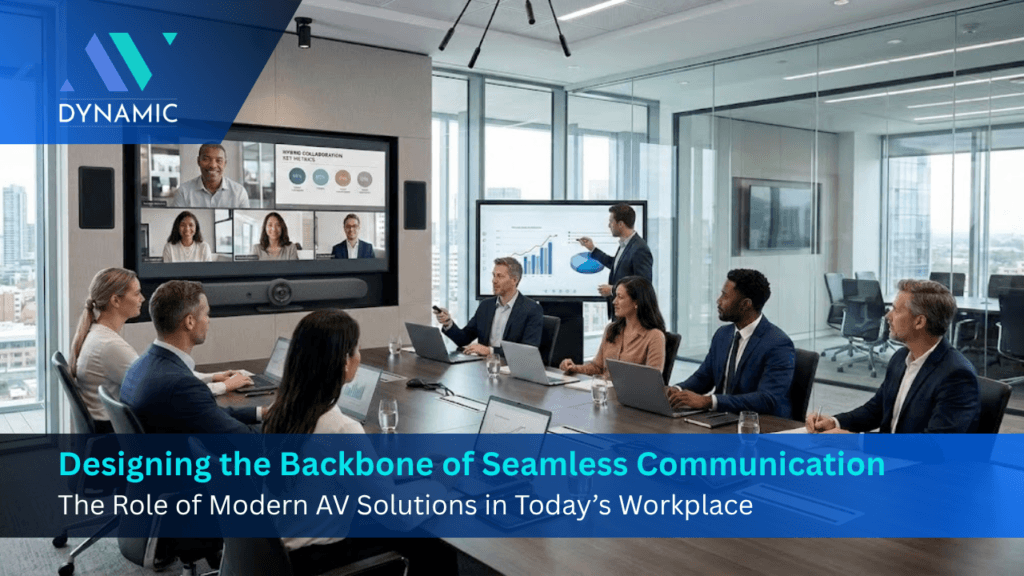
Discover how AV systems improve business engagement, customer experiences, collaboration, and communication. Learn why AV Dynamic is a trusted AV solution provider for modern audio video solutions.
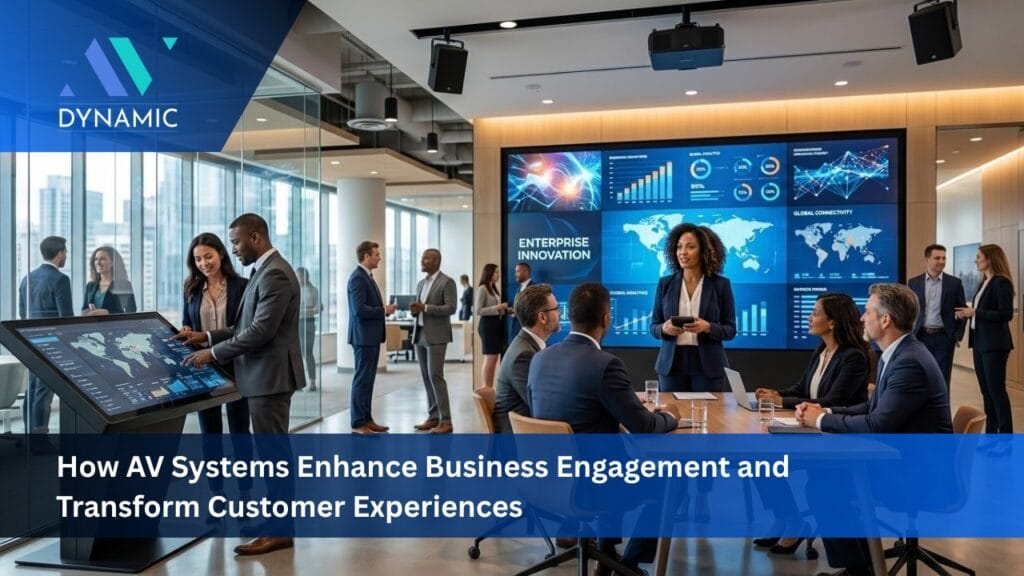
Discover how AV systems improve business engagement, customer experiences, collaboration, and communication. Learn why AV Dynamic is a trusted AV solution provider for modern audio video solutions.
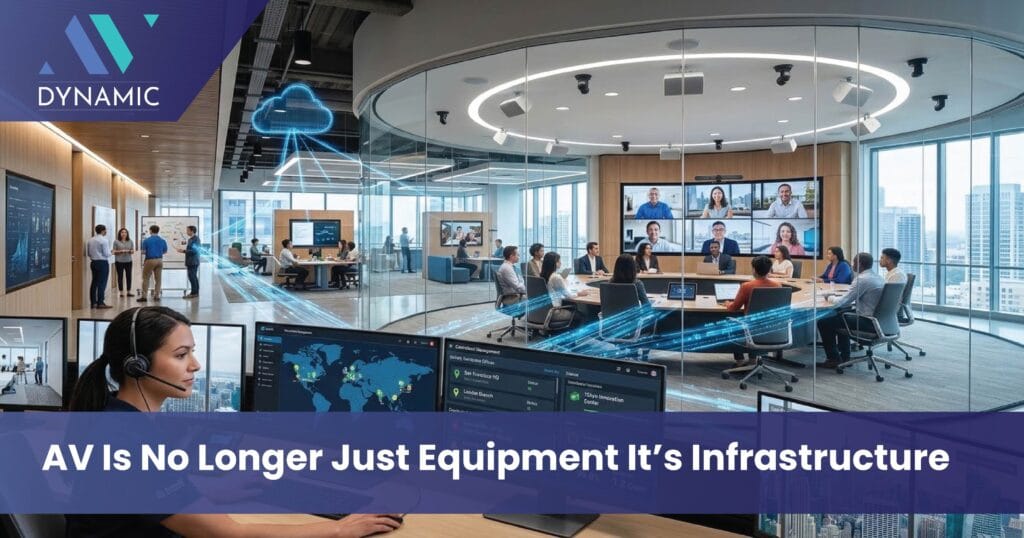
AV is no longer just equipment—it’s critical infrastructure. Discover how modern AV systems drive communication, collaboration, and business growth.
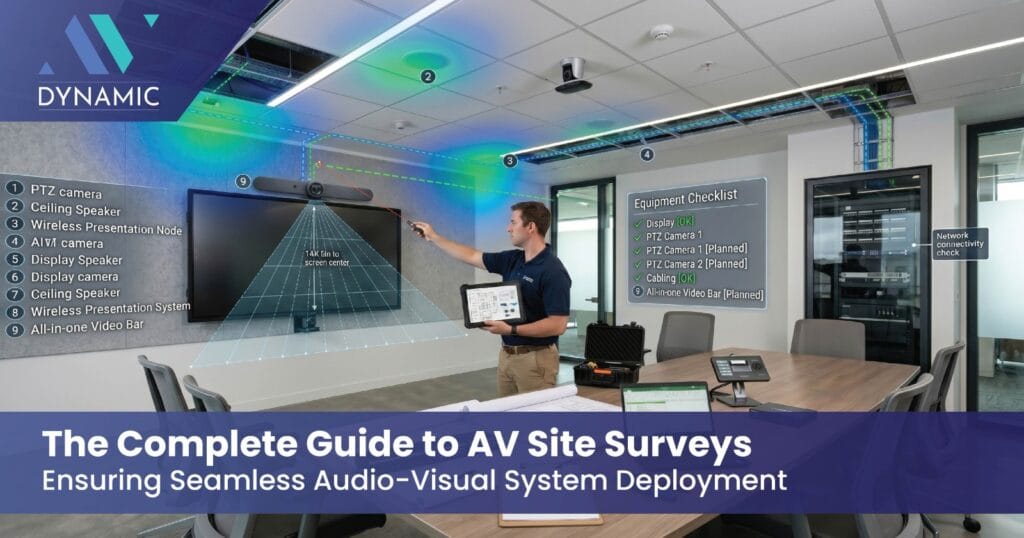
Learn how AV site surveys improve system performance and deployment success. AV Dynamic delivers reliable audio video solutions for modern businesses.
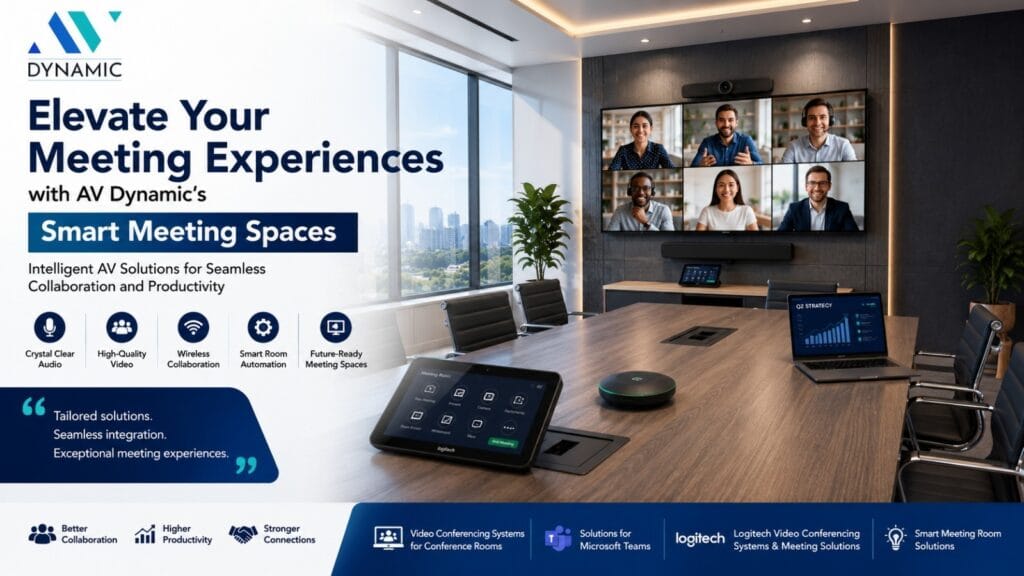
Elevate Your Meeting Experiences with AV Dynamic’s Smart Meeting Spaces In the modern workplace, meetings are no longer limited to physical conference rooms and basic presentation setups. Businesses today need intelligent collaboration environments that support seamless communication, hybrid teamwork, and engaging discussions. This is where professional audio video solutions play a crucial role. As a trusted AV integration company, AV Dynamic helps organizations transform ordinary meeting rooms into advanced “Meeting Spaces” designed for productivity, collaboration, and performance. Our customized consultation and design approach ensures that every business receives scalable, future-ready AV solutions tailored to their communication needs. Why Businesses Need Modern Conference Room AV Solutions Poor audio quality, disconnected video conferencing systems, and outdated presentation tools can negatively impact productivity and decision-making. Modern businesses require conference room AV solutions that deliver: Clear communication Reliable video conferencing Seamless device connectivity Easy collaboration Professional meeting experiences Whether it’s an executive boardroom, training room, or collaborative workspace, the right audio visual solutions improve efficiency and create more engaging meetings. AV Dynamic: Your Trusted AV Solution Provider At AV Dynamic, we understand that every organization has unique requirements. As an experienced AV solution provider, we design and deploy customized meeting environments that combine innovation, simplicity, and reliability. Our solutions are designed to support: Hybrid meetings Remote collaboration Wireless presentations Smart room automation Interactive communication By integrating advanced technologies, we help businesses create smarter meeting spaces that improve communication and streamline operations. Our Conference Room Audio Video Solutions Advanced Audio Systems Clear audio is essential for effective meetings. Our conference room AV solutions include high-performance microphones, speakers, and sound processing systems that ensure every participant is heard clearly. Intelligent Video Conferencing Modern businesses rely heavily on virtual collaboration. We provide high-definition conferencing systems with smart cameras and seamless platform integration for smooth hybrid communication. Wireless Collaboration Technology Our audio video solutions support wireless content sharing and real-time collaboration, helping teams communicate more efficiently without technical interruptions. Smart Room Automation Simplify meeting room management with intelligent AV control systems that allow users to manage displays, audio, lighting, and conferencing tools from a single interface. Interactive Displays and Presentation Systems We deliver professional display solutions that improve engagement and enhance visual communication during meetings and presentations. Benefits of Professional AV Solutions Choosing the right AV integration company offers long-term business advantages. Improved Meeting Productivity Reliable technology minimizes delays and technical issues, allowing teams to focus on discussions and decision-making. Better Hybrid Collaboration Professional audio visual companies help organizations create seamless experiences for both in-office and remote participants. Enhanced User Experience Simple and intuitive AV systems make meeting rooms easier to operate for employees at every level. Scalable Technology Infrastructure Future-ready AV solutions allow businesses to adapt to evolving workplace technologies and collaboration needs. Stronger Professional Communication High-quality audio and video improve interactions with clients, partners, and internal teams. Why Businesses Choose AV Dynamic Among leading audio visual companies, AV Dynamic stands out for its customer-focused approach and technical expertise. We work closely with businesses to understand their goals and deliver customized conference room AV solutions that align with operational requirements. Our process includes: Consultation and planning AV system design Professional installation Technology integration User training and support Ongoing maintenance services As a reliable AV solution provider, our focus is on delivering meeting environments that are efficient, scalable, and easy to use. Future-Ready Meeting Spaces for Modern Businesses Today’s organizations need more than traditional meeting rooms. They need connected environments that support collaboration, communication, and productivity. With AV Dynamic’s advanced audio video solutions, businesses can create immersive meeting experiences that improve teamwork and simplify communication across every department. If you are searching for a dependable AV integration company to upgrade your workplace technology, AV Dynamic provides customized AV solutions that help businesses build smarter and more productive meeting spaces. Frequently Asked Questions What is a video conferencing system for a conference room? A video conferencing system for a conference room is a combination of cameras, microphones, speakers, displays, and collaboration software that enables seamless virtual meetings. These systems help businesses conduct professional meetings with remote teams, clients, and partners while ensuring clear audio and high-quality video communication. Which is the best large conference room video conferencing system? The best large conference room video conferencing system depends on room size, meeting requirements, and collaboration platforms. Large rooms typically require advanced PTZ cameras, ceiling microphones, powerful speakers, and integrated AV control systems to ensure every participant can communicate clearly and effectively. What are conference room solutions for Microsoft Teams? Conference room solutions for Microsoft Teams are specially designed AV setups that integrate directly with Microsoft Teams for smooth hybrid collaboration. These solutions often include Teams-certified cameras, touch controllers, microphones, speakers, and interactive displays for seamless communication and scheduling. What are the different conference room setup styles? Conference room setup styles vary based on business needs and room layouts. Common styles include: Boardroom setup U-shape setup Classroom setup Theater style setup Collaborative meeting space Hybrid conference room setup Each style is designed to support different types of meetings, presentations, and collaboration requirements. What is a Smart Meeting Room Solution? A Smart Meeting Room Solution combines advanced audio video solutions, automation, wireless collaboration, and intelligent controls to create an efficient and connected meeting environment. Smart meeting rooms improve productivity by simplifying room management, enhancing communication, and enabling seamless hybrid meetings.
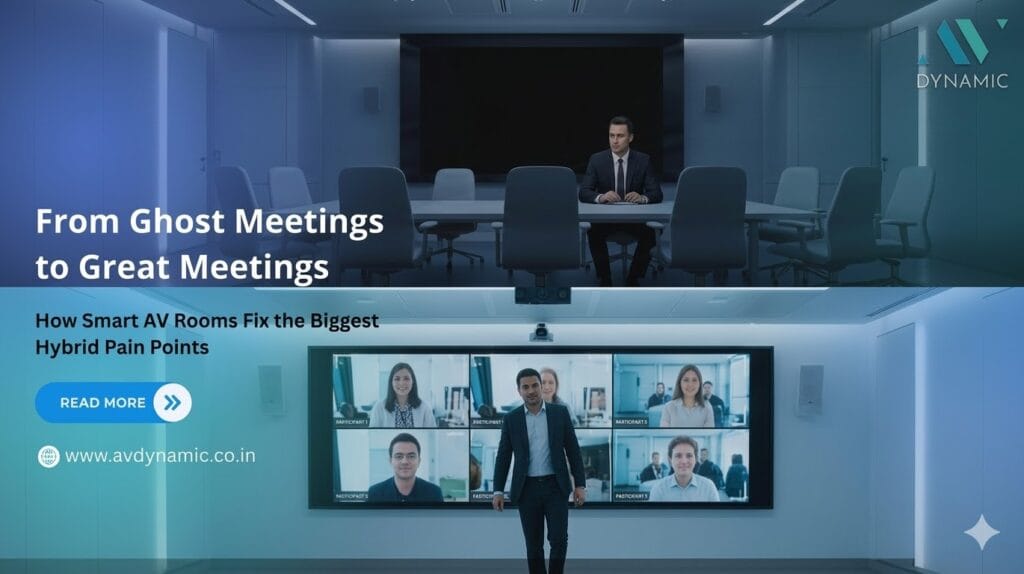
From Ghost Meetings to Great Meetings: How Smart AV Rooms Fix the Biggest Hybrid Pain Points Modern enterprises have upgraded their software, cloud, and networks—but many meeting rooms still feel stuck in the past. In this blog, we explore the real pain areas in large and hybrid meeting spaces, and how AV Dynamic solves them with intelligent AV design and next‑gen camera technology. 1. When People Look Like Dots on Screen In large boardrooms, training spaces, and town halls, remote participants often see a wide, flat view where faces are tiny and body language is lost. This leads to low engagement, poor reading of reactions, and “second‑class citizen” experiences for those joining online. Cameras without intelligent framing struggle to balance room coverage and facial clarity. Decision‑makers miss subtle cues, and presenters cannot “read the room” remotely. At AV Dynamic, we design meeting spaces with AI‑enabled cameras, intelligent framing, and carefully planned sightlines so every participant appears clearly—no matter where they sit. 2. Presenters Who Keep Walking Out of Frame In real meetings, presenters rarely stand still: they move between displays, whiteboards, and the discussion table. Traditional fixed or manually controlled PTZ cameras cannot keep up, forcing IT or in‑room operators to adjust views mid‑session. Training and town hall sessions lose impact when the presenter is half‑visible or out of frame. Recording and streaming quality suffer, which affects reusability of content for onboarding and learning. AV Dynamic engineers rooms with cameras that track speakers and presenters intelligently, combined with strategic placement to ensure smooth, natural visuals whether the speaker is at the podium, panel, or whiteboard. 3. Flat, Single‑Angle Meetings That Feel One‑Dimensional Hybrid meetings fall short when everyone sees the same static, wide shot. Side conversations, reactions, and in‑room dynamics are lost, making online participants feel disconnected from what is really happening in the room. Single‑angle setups make large rooms feel lifeless and hard to follow. Leadership briefings, customer demos, and town halls lose the “in‑room energy” that builds trust. With multi‑camera strategies and smart switching, AV Dynamic creates cinematic, multi‑angle meeting rooms—so remote users experience the room more like being there, not just watching a distant stage. 4. Ghost Meetings and Wasted Real Estate Many enterprises struggle with “ghost bookings”—rooms reserved on calendars but sitting empty, while teams complain there are no available spaces. Facilities teams lack accurate occupancy data to right‑size meeting spaces or optimize floors. Underused rooms drive up real estate and operating costs. Popular rooms stay overbooked while other spaces remain idle. AV Dynamic integrates occupancy analytics and intelligent sensors into meeting room designs, giving business and facilities leaders real data on how spaces are actually used and enabling smarter planning, consolidation, or expansion. 5. IT Teams Overwhelmed by Room Support IT departments are expected to keep dozens or hundreds of rooms online with minimal staff. When every space uses different hardware, cabling, and interfaces, support tickets explode and teams spend valuable time firefighting on site. Frequent “can you come fix the meeting room?” calls drain IT bandwidth. Firmware updates, security patches, and troubleshooting require physical visits. AV Dynamic standardizes meeting room designs, simplifies cabling, and pairs hardware with remote monitoring and managed services—so IT sees room health in one pane of glass and issues are resolved proactively, not reactively. 6. Beautiful Rooms Spoiled by Visible Tech Modern offices invest heavily in interior design, yet bulky cameras, exposed cabling, and mismatched displays can spoil the aesthetic. This is especially sensitive in CXO boardrooms, client presentation suites, and experience centres. Visible clutter reduces the perceived premium value of the space. Architects and workplace designers want technology that disappears into their design language. AV Dynamic collaborates closely with architects, designers, and PMCs to integrate AV discreetly—in‑wall mounts, ceiling installations, and colour‑coordinated hardware—so rooms look as good as they perform. 7. Hybrid Collaboration That Still Feels One‑Sided Even after investing in video platforms, many organizations find that remote colleagues struggle to participate equally in discussions. Poor audio pickup, limited camera coverage, and confusing controls turn every meeting into a technical exercise instead of a business conversation. Remote voices get talked over because in‑room participants can’t hear them clearly. Meeting time is wasted on “Can you hear me?” instead of making decisions. AV Dynamic designs end‑to‑end hybrid‑ready spaces—intelligent cameras, beamforming microphones, high‑quality speakers, and intuitive control—so every participant, in the room or remote, feels heard, seen, and included. Why Partner with AV Dynamic for Your Next‑Gen Meeting Rooms? AV Dynamic is a specialist AV solutions company delivering meeting spaces, boardrooms, training rooms, and town halls for leading enterprises across India. From consultative design to installation and managed services, we engineer rooms that solve real‑world pain areas instead of just adding more gadgets. If your meeting rooms suffer from low engagement, ghost bookings, or constant IT escalations, it’s time to rethink your AV strategy. Connect with AV Dynamic to experience live, fully integrated hybrid spaces and design meeting rooms that truly work for the way your teams collaborate today.

Designing the Future of Enterprise Meeting Rooms: How AI Cameras and Intelligent AV Design Are Transforming Hybrid Collaboration Modern enterprises are undergoing a profound shift in how teams collaborate. Hybrid work has moved from being an experiment to becoming the default operating model for many organizations. Employees join meetings from offices, homes, and global locations, making the quality of meeting room technology more critical than ever. In this environment, enterprise meeting rooms are no longer just physical spaces. They have become digital collaboration hubs that must deliver a seamless experience for both in-room and remote participants. This is where advanced technologies such as the Logitech Rally AI Camera and Logitech Rally AI Camera Pro are changing the game. Powered by AI video intelligence, precision optics, and flexible deployment models, these cameras are designed to solve many of the challenges organizations face in hybrid meetings. However, technology alone does not guarantee successful meetings. The real transformation happens when advanced collaboration technologies are integrated into meeting environments through intelligent AV design and consulting. This is the space where AV Dynamic plays a critical role for enterprise organizations. The Enterprise Meeting Challenge Despite the availability of modern collaboration tools, many enterprises still struggle with inefficient meeting environments. Common problems include: Remote participants unable to clearly see in-room attendees Speakers moving out of camera frame during discussions Poor camera angles that reduce engagement Inconsistent meeting experiences across different rooms Complex systems that require IT support to start meetings Industry data highlights the scale of the challenge: According to Gartner, 75% of enterprise meetings will include remote participants by 2027. Research from Microsoft shows over half of remote participants feel less engaged in hybrid meetings when room technology is poorly designed. Studies from Frost & Sullivan estimate that up to 25% of enterprise IT support tickets are related to meeting room technology issues. These insights make one thing clear: The future of collaboration depends on how intelligently meeting rooms are designed. AI Cameras: A New Era of Meeting Intelligence Modern AI-powered cameras are transforming how meetings are captured and experienced. The Logitech Rally AI camera series introduces several innovations designed specifically for enterprise collaboration environments. Intelligent Framing and Speaker Tracking AI-driven framing automatically detects participants and adjusts the camera view to ensure everyone is visible. When someone speaks, the system can dynamically highlight the active speaker. This creates a more natural and engaging meeting experience, especially for remote attendees. Presenter Tracking for Large Rooms In large training rooms or boardrooms, presenters often move around while speaking. AI cameras can follow presenters automatically, keeping them in frame without requiring manual camera control. Multi-Camera Intelligence Advanced meeting environments may deploy multiple cameras in the same room. AI coordination ensures smooth switching between views, allowing remote participants to see the room from different perspectives. Precision Optics for Large Spaces Enterprise rooms require high-quality optical performance. Cameras like the Rally AI Camera Pro provide powerful zoom capabilities and wide field-of-view coverage, ensuring clarity even in large conference spaces. These technologies bring powerful capabilities to meeting rooms but their effectiveness depends heavily on how they are designed into the environment. Why AV Design Matters More Than Hardware Deploying advanced cameras without proper AV design often leads to disappointing results. Incorrect camera placement, poor microphone coverage, or improper room layout can reduce the benefits of even the most advanced collaboration technology. This is why enterprise organizations increasingly rely on specialized AV design partners. At AV Dynamic, the focus is not just on installing equipment it is about designing intelligent collaboration environments. Key design elements include: Camera Placement Strategy Camera placement must consider: participant seating layouts speaker movement patterns sightline optimization coverage for large and small groups Proper placement ensures that AI features like speaker tracking and framing operate effectively. Multi-Camera Room Architecture Different meeting environments require different camera strategies. For example: Executive boardrooms benefit from dual-camera setups for balanced participant views. Training rooms may require presenter tracking cameras. Town hall or collaboration spaces may use multi-camera configurations for immersive coverage. AV Dynamic designs camera systems that match the purpose and scale of each meeting space. Integration with Collaboration Platforms Enterprise meeting rooms must integrate seamlessly with platforms such as Microsoft Teams and Zoom. This ensures: one-touch meeting start automated camera control consistent user experiences across rooms AV Infrastructure and Network Design Large enterprises require scalable and manageable AV systems. AV Dynamic designs infrastructure that supports: AV-over-IP networks centralized device management remote monitoring and diagnostics This reduces operational complexity and improves long-term reliability. The Business Impact of Intelligent Meeting Rooms The enterprise meeting room is evolving into an intelligent environment powered by AI, automation, and integrated collaboration platforms. Technologies such as the Logitech Rally AI camera series provide the building blocks for this transformation. But to unlock their full potential, organizations need strategic AV design expertise. This is where AV Dynamic’s AV Design and Consulting services create real value. By combining advanced collaboration technology with intelligent room architecture, AV Dynamic helps enterprises build meeting spaces that support modern hybrid work delivering better engagement, higher productivity, and a truly seamless collaboration experience. The future of enterprise collaboration is not just about better cameras.It is about better-designed meeting environments. And that is exactly what AV Dynamic delivers. Designing the Meeting Room of the Future The enterprise meeting room is evolving into an intelligent environment powered by AI, automation, and integrated collaboration platforms. Technologies such as the Logitech Rally AI camera series provide the building blocks for this transformation. But to unlock their full potential, organizations need strategic AV design expertise. This is where AV Dynamic’s AV Design and Consulting services create real value. By combining advanced collaboration technology with intelligent room architecture, AV Dynamic helps enterprises build meeting spaces that support modern hybrid work delivering better engagement, higher productivity, and a truly seamless collaboration experience. The future of enterprise collaboration is not just about better cameras. It is about better-designed meeting environments. And that is exactly what AV Dynamic
From Boardroom to Control Room: How AV Architecture Shapes Faster, Smarter Decisions Organizations don’t win because they have meetings. They win because they make the right decisions quickly and then execute. Yet in many companies, the single biggest bottleneck is not strategy, or people, or even budget. It is the way information moves slowly, inconsistently, and with constant friction. This is where AV architecture becomes a strategic weapon rather than a support tool. Whether we are talking about executive boardrooms defining direction or mission‑critical control rooms monitoring live operations, the structure of the audiovisual environment determines how fast truth reaches decision‑makers. Done right, AV reduces confusion, kills downtime, and helps leaders move with clarity and confidence. What Exactly Is AV Architecture? AV architecture is the blueprint behind the experience. It involves how audio, video, control systems, and network layers connect, communicate, and stay reliable under pressure. Displays, microphones, speakers, processors, cameras, codecs, switching, control interfaces, and IP networking all work together as one ecosystem. Poor AV is usually obvious: delays, frozen screens, echoes, awkward hand‑offs, constant IT interruptions. Good AV almost disappears. Information simply flows. People stop thinking about “technology” and stay focused on the problem in front of them. That shift alone dramatically accelerates decision‑making. Boardrooms: Where Clarity Drives Alignment Modern boardrooms are not presentation rooms anymore — they are decision engines. Leaders review analytics, consolidate viewpoints, challenge assumptions, and commit to action. When AV gets in the way, everything slows. Well‑designed boardrooms emphasize: Ultra‑clear visual displays so complex data can be interpreted instantly Frictionless video conferencing that allows remote voices to join without delay Wireless presentation tools that avoid cables, adapters, and tech drama Unified control interfaces so anyone can operate the room within seconds The impact is simple: fewer interruptions, faster discussions, cleaner communication, and tighter alignment. Decisions become sharper because the signal is strong and the noise is gone. Control Rooms: Decisions Without Pause Control rooms are different. There is no luxury of time. Transportation networks, utilities, manufacturing plants, emergency services, command centers — here decisions happen continuously and consequences are real. AV architecture in these environments prioritizes: Massive video walls for multi‑source situational awareness Low‑latency signal distribution so operators see events in real time Redundancy across power, network, and hardware for 24/7 uptime Ergonomic layouts that reduce fatigue and cognitive overload In a control room, three seconds of delay can become an incident. Ten minutes of downtime becomes a crisis. Solid AV architecture prevents both. Different Spaces, Same Outcome Boardrooms and control rooms look different, but they share one mission: move the right information to the right people at the right moment. The design philosophy shifts, but the outcome is identical — speed with accuracy. Organizations that treat AV as decoration pay for it with slower thinking and inconsistent execution. Those that treat it as infrastructure build a genuine competitive advantage. How AV Architecture Accelerates Decisions Strong AV architecture improves decision speed in several ways:1. Faster access to relevant information through centralized systems 2. Cleaner visuals and audio that reduce mental strain 3. Integrated collaboration tools that bring teams together instantly 4. Standardized room experiences so learning curves disappear 5. Built‑in reliability that eliminates delays caused by failure The result is not just smoother meetings it is faster cycles of learning, debate, and commitment. Network‑First: The Future of AVToday, AV is moving fully onto enterprise networks. AV‑over‑IP allows video, audio, and control data to travel just like any other digital service. This unlocks scalability, easier expansion, smarter monitoring, and improved security when designed correctly. Network‑centric AV also allows organizations to connect locations, replicate room templates, update systems remotely, and grow without ripping out infrastructure every time. Conclusion The speed of decision‑making is no longer just a leadership trait — it is a technology outcome. From high‑level strategy rooms to nonstop control environments, AV architecture silently shapes how fast organizations observe, understand, decide, and act. Investing in thoughtful AV design is not about gadgets. It is about reducing friction, protecting uptime, and empowering people to move with clarity when it matters most. For companies that want to operate at a higher level, AV is no longer optional — it is foundational.